

The Long Road To Sequential Attack Resolution - 3.05 Update
- Joe Dawson

- Apr 12
- 6 min read
Updated: Apr 12
The 3.05 rules update brings two foundational changes to the game we all know and love, both aimed at improving gameplay for every player and making the game more dynamic. But before we get into the nuts and bolts of what else has been improved with this update, it’s worth taking a step back and looking at how we got here.
Highlander: The Card Game has always stood apart from other TCGs, largely because of the Swordmaster System. For a core system that dates back over 30 years, born out of the 1990s TCG boom, it has held up remarkably well, which is a testament to the original designers and the game's creator.
However, one grey area has repeatedly come up during tournaments and competitive play and warranted a deeper look from the rules team.
It all started with a simple question, "When exactly is a defense declared successful thus declaring an attack unsuccessful?"

Resolution Issues - When are attacks and defenses"declared successful"?
On the surface, this seems like a pretty straightforward question with a simple answer.
So we did the obvious thing — we asked players. We wanted them to keep in mind that if attacks are declared successful, it logically follows that defenses must be declared successful too.
"When do you declare that an attack is not successful? And when do you declare a defense successful?"
The answers were all over the place.
Some players believed you collect all non-defended attacks and resolve them simultaneously, then resolve all successful defenses at the same time at the end of the Defense Phase. Others believed they resolved in the order they were not defended. Others believed they resolved in the order they were played. While many defenses impact your Attack Phase if they are the last defense you play, there are others that could impact your Defense Phase.
In our questions to players, we asked them to think of their answers while imagining they had played this card:
Block: DRAW: When this defense is declared successful, draw a card.
When do you get to draw that card?
As we dug deeper, we realized that part of the game system — and how cards have historically been designed — assumed sequential resolution, while the rules have not always supported that. A good example is an attack that, if declared successful, impacts the next attack in your attack chain. That implies sequential resolution. But the rules have long allowed you to defend out of order, due to Hard Exertions locking you out of your hand.


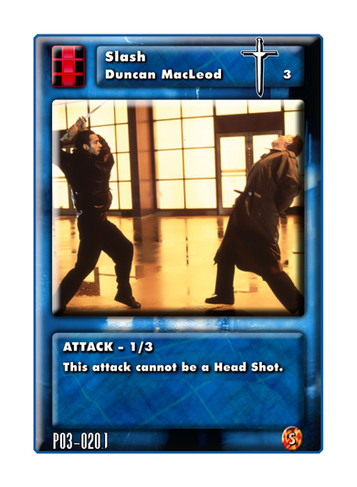
Player A plays two attacks. The first says, "If this attack is successful, your next attack cannot be dodged." Player B only has a Dodge that can defend the second attack, because the current rules allow defending out of order — so a Dodge that avoids the second attack is now on the table.
Do we declare it successful? But what if that first attack is later declared successful? Now that Dodge can't defend the second attack.
Do you see the issue?
If Player B defends out of order, they might Dodge the second attack first, then attempt to deal with the first attack by Exerting. If they fail to find a legal defense, the first attack becomes successful — and now the second attack cannot be dodged.
But the Dodge was already played.
That creates a situation where a defense becomes retroactively invalid.
This is exactly the kind of confusion this update aims to address. So the rules team took a hard look at what it would take to make attack resolution fully sequential — not just implied in some places, but consistent across the entire game.

Sequential Attack Resolution and Hard Exertions
It quickly became clear that that the current system of being able to defend attacks out of order was a byproduct to another rule—the Hard Exertion rule.
We all know that after making a Hard Exertion you cannot continue playing cards from your hand. This is why the rules allow you to defend out of order. You defend any attacks you can from your hand, then make a Hard Exertion for any you cannot, because after that Hard Exertion you are locked out of your hand. And that is why the game could never have sequential resolution. If you have to defend attacks in order and the first can only be defended with a defense from a Hard Exertion, that tactic would become mandatory in nearly every deck build — and that wouldn't be good for the game. So to have any chance at sequential attack and defense resolution, we needed to revisit the Hard Exertion ruleset. Making a Hard Exertion is a high risk, high reward action in HTCG that comes with many drawbacks.
There is no guarantee of finding the card you are looking for. You are losing access to either 4 or 5 cards that you cannot draw into as they are now in your Discard Pile.
You are also 5 cards closer to exhausting and losing 5 Ability. Historically, you cannot play ANY cards from your Hand for the remainder of that phase after making a Hard Exertion. The design and rules teams asked themselves: do Hard Exertions need to be that punitive? After months of discussion and playtesting, we landed on no — they do not.
Updating the Hard Exertion Ruleset
As of the V3.05 rules update, making a Hard Exertion no longer shuts you out of your Hand entirely.
Instead, it limits what you can play for the remainder of that phase: gridded cards, plus one card played in conjunction with each gridded card you play. That's it. This change exists specifically to enable sequential attack resolution.
You still have to plan ahead with your Hard Exertions.
You still have to plan ahead with your Hard Exertions. Say you have no defenses in your hand, but you do have an Alertness, and your opponent plays an attack that cannot be dodged. You play your Alertness from your hand just as you always have, and hope to find a usable defense in your Exertion.
However, the updated rule does change how this plays out in a multi-attack setting, and it's not much cleaner.
Say your opponent plays three attacks. The first cannot be dodged. You have a defense in your hand that covers the second and third attacks. Rather than defending out of order and then Exerting for a defense against the first attack, you now defend in order. You play your Alertness and announce a Hard Exertion for a defense against attack one. Now, instead of being locked out of your hand entirely, you move on to defend attacks two and three — but because you already made a Hard Exertion, you can only play gridded cards from your hand and one conjunction card per gridded card played.
Essentially, this flips the order of operations while preserving your options — and critically, it allows for fully sequential attack and defense resolution.
Sequential Attack and Defense Resolution
Each attack in the Attack Chain now resolves sequentially, and each defense resolves sequentially too. So let's revisit those earlier questions we asked players before the 3.05 update.
Your opponent plays two attacks. Against the first, you play this card:
Block: DRAW: When this defense is declared successful, draw a card.
With sequential resolution, you draw that card before you even defend the second attack.
Now let's revisit the Duncan Macleod Leg Sweep and Slash example from above. Because you now defend in order, the first defense you play — whether from your hand or from a Hard Exertion — must be against the first attack in the chain: Leg Sweep. There will never be a situation where the effects of Leg Sweep are unknown when defending the next attack in the chain. No more edge cases. No more retroactively invalidated defenses.

Summing Things Up - How this Improves the Game
Sequential resolution of both attacks and defenses doesn't just clean up edge cases — it makes the game more dynamic and attacks more lethal. Effects like Prone, Burn, and Discard now occur in the order they appear in the Attack Chain. If the first attack states "If this attack is successful, your opponent is Prone," and that attack goes undefended, you will be Prone before you defend the next attack in the chain. The stakes of every exchange are higher, and the order in which your opponent builds their Attack Chain now carries real strategic weight. The same applies to wounds. Since wounds are inflicted when an attack is declared successful, sequential resolution means wounds land in order too. A successful early attack in the chain could leave you wounded before you've had a chance to defend what follows — adding a new layer of pressure to every defensive decision you make. Looking ahead, this update opens up significant design space as well. With sequential resolution now fully supported by the rules, expect to see more defenses that impact your next steps during the Defense Phase — cards that reward smart sequencing and punish a poorly ordered chain in ways that simply weren't possible before.
These two changes — sequential resolution and the updated Hard Exertion rule — work together to create a cleaner, more tactical, and more exciting game for everyone at the table. The rules team is proud of where 3.05 has landed, and we hope you enjoy playing with it as much as we enjoyed building it.
For the full breakdown of every change and update in 3.05, make sure to check out the main rules post. There's a lot to dig into, and we can't wait to hear what you think!
You can find the comprehensive rule book as a downloadable PDF here:


Comments